The headline OTT statistic is simple: streaming has overtaken traditional TV, and the growth is now less about "more subscribers" and more about how people pay — ad-supported tiers, FAST channels, and hybrid models are rising fastest. For operators, the useful takeaway isn't a single number that's outdated by next quarter; it's the direction of travel: audiences are fragmenting, ad-supported viewing is booming, and retention — not acquisition — is where the money is won or lost.
The big shift: streaming over broadcast
The defining OTT trend is the crossover: time spent streaming has surpassed traditional cable and broadcast viewing in many major markets, and connected TVs are now the default screen. That's not a temporary spike — it's a structural move in how people watch. The open question for every content owner is no longer "will audiences stream?" but "how do we monetize them profitably once they do?"
Trend 1: Ad-supported streaming (AVOD & FAST) is booming
The fastest-growing part of OTT isn't pure subscription — it's ad-supported. Viewers hit "subscription fatigue," and nearly every major service has launched a cheaper ad tier. Alongside them, FAST (free ad-supported streaming TV) channels have exploded, recreating the lean-back, linear-channel experience with ads. Advertising has become a primary OTT revenue engine, not an afterthought.
Trend 2: Hybrid monetization and bundling
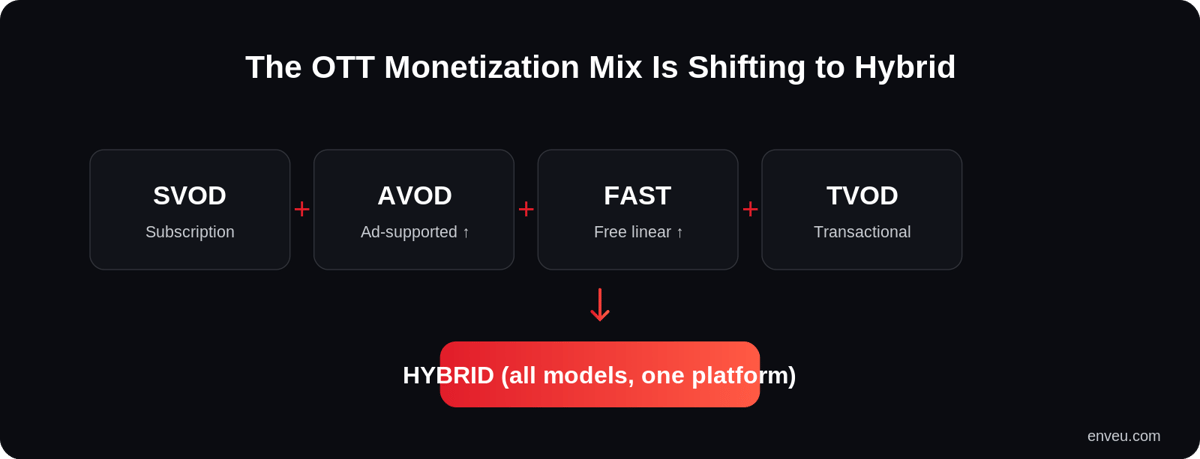
The clean "subscription-only" era is over. Winning services now blend models — subscription, ads, transactional and free tiers — and increasingly bundle with other services to lower churn. The lesson from the platforms doing well is model flexibility: meet viewers at every price point instead of forcing one.
Trend 3: Retention is the new battleground
Acquiring a subscriber is easy; keeping one is hard. As the market matures, churn and retention have become the metrics that decide profitability. Password-sharing crackdowns, personalized recommendations, and content cadence are all really about the same thing — keeping viewers from cancelling. The operators who win optimize for lifetime value, not just signups.
The OTT monetization mix, at a glance
| Model | What it is | Trend |
|---|---|---|
| SVOD | Subscription video on demand | Mature; growth now via ad tiers & bundling |
| AVOD | Ad-supported video on demand | Rising fast — the main growth driver |
| FAST | Free ad-supported streaming TV (linear channels) | Booming; recreates lean-back TV |
| TVOD / Hybrid | Transactional + combined models | Hybrid is becoming the default |
What these OTT trends mean for operators
Read together, the statistics point to one strategy: be flexible on monetization and relentless on retention. Don't bet the business on a single subscription price — offer ad-supported and FAST options to capture viewers who won't pay, and use hybrid models to grow revenue per user without growing churn.
That's exactly what Enveu's monetization is built for: run SVOD, AVOD, TVOD, FAST-style linear, PPV and hybrid on your own branded apps at 0% revenue share, and adjust the mix as the market shifts. Having launched 50+ OTT platforms, we've seen the ad-supported and hybrid shift play out first-hand. Explore Experience Cloud, learn how Netflix makes money, or read what OTT means in broadcasting.