Multi-DRM video encryption for VOD and live
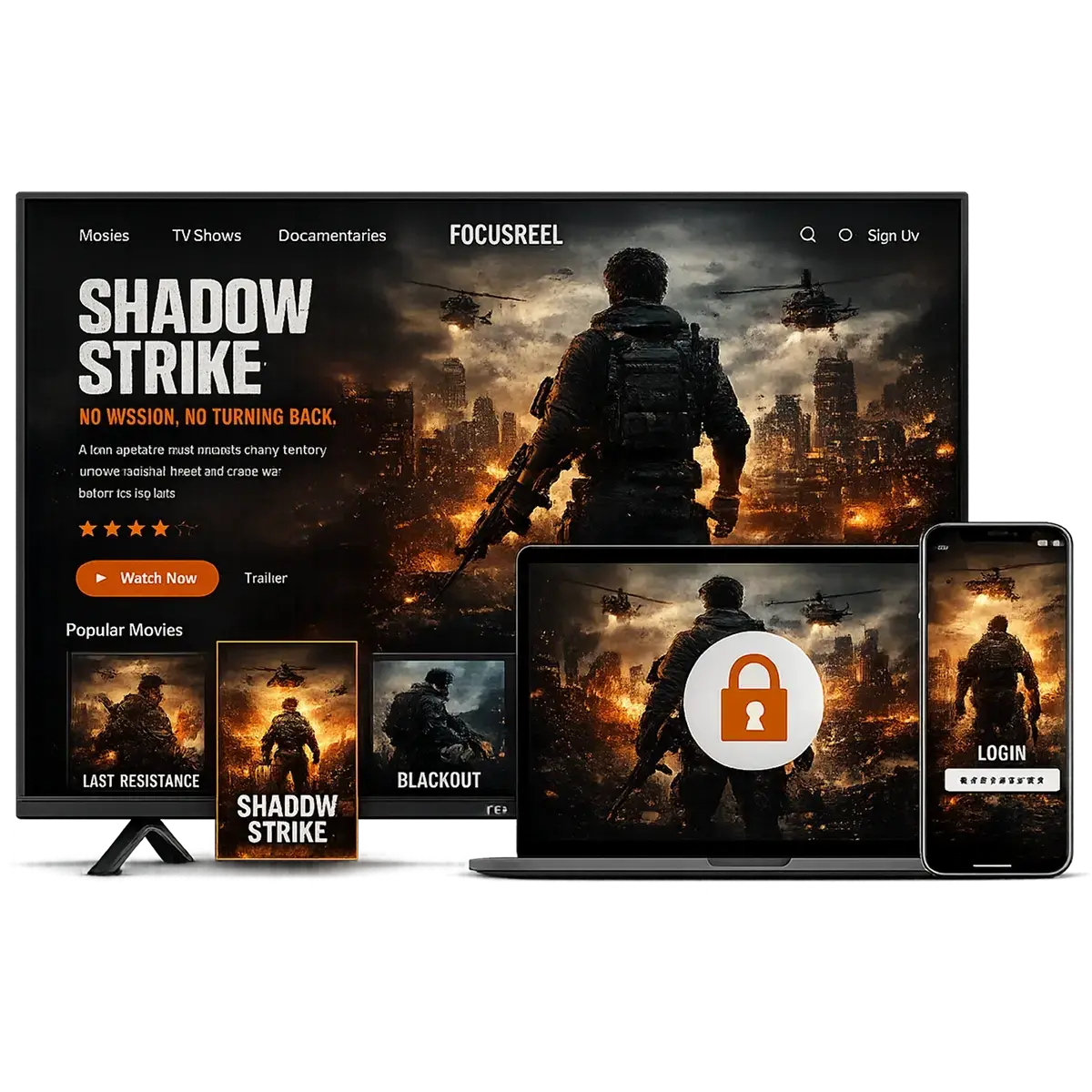
A DRM video encryption platform encrypts your video and issues per-device licences so only authorised viewers can play it. Enveu provides multi-DRM — Widevine, PlayReady and FairPlay — from one workflow, plus AES-encrypted HLS, geo-blocking, concurrency limits and screen-recording protection, for both VOD and live.






DRM (digital rights management) encrypts your video at packaging and issues a decryption licence to each device individually. Without a valid licence, the file is useless — which is what studios and rights-holders require before they will license premium content to you.
The complication is that every device family uses a different DRM: Widevine on Android and Chrome, PlayReady on Windows and many smart TVs, FairPlay on Apple. A multi-DRM platform runs all three from one packaging workflow, so you protect the catalogue once and it plays everywhere. Enveu adds geo-blocking, device and concurrency limits, and screen-recording protection on supported devices.
DRM is usually a procurement requirement before it is a technical one — no studio or league will license premium content to a platform that cannot prove it. The practical question is whether you buy three separate DRM integrations and maintain them, or run all three from one packaging workflow. The second is cheaper to operate and far less likely to break silently on one device family after an OS update.
Protection at every layer
Multi-DRM
Widevine, PlayReady and FairPlay licensing from a single workflow.
Encrypted HLS & AES
End-to-end AES-encrypted HLS and DASH delivery.
Secure key management
Encryption keys issued, stored and rotated securely, so licences only reach authorised playback.
Recording protection
Screen-record prevention, app restrictions and session monitoring.
Geo & concurrency controls
Geo-blocking, IP rules, device limits and concurrent-stream caps.
Secure offline & storage
Encrypted downloads for offline viewing, and secure video storage.
How multi-DRM works: one file, three licences
Multi-DRM doesn't mean encrypting your library three times. Enveu packages each title once using Common Encryption (CENC) in CMAF, encrypting segments with AES-128 in cbcs mode. Widevine, PlayReady and FairPlay can all decrypt that same set of segments, so you store and cache one copy.
What differs is the licence. When a viewer presses play, the player detects which DRM the device supports and requests a licence from the matching licence server. The licence carries the content key plus your rules: how long it lasts, which output protection is required, and whether offline playback is allowed. Enveu checks entitlement first (subscription, rental, geo, device count), so a valid account on the wrong device or in the wrong country gets no key.
Which DRM does each device need?
| Device / browser | DRM used |
|---|---|
| Chrome, Firefox (desktop) | Widevine |
| Microsoft Edge (Windows) | PlayReady or Widevine |
| Safari (macOS), iPhone, iPad, Apple TV | FairPlay |
| Android phones and tablets, Android TV, Google TV | Widevine |
| Amazon Fire TV | Widevine or PlayReady |
| Samsung Tizen, LG webOS smart TVs | PlayReady or Widevine |
| Xbox, Windows apps | PlayReady |
| Roku | PlayReady or Widevine |
The rule of thumb: you need all three to reach every major screen. FairPlay alone is the only route to Apple devices and Safari, and Widevine covers most of the rest.
Security levels and studio requirements
The same DRM can run in hardware or software, and studios care which. Premium HD and 4K licences usually require hardware-backed decryption plus HDCP output protection. Software-only devices get capped at lower resolutions.
| DRM | Hardware level | Software level |
|---|---|---|
| Widevine | L1 (decrypts inside a trusted execution environment) | L3 (software only, often capped at SD) |
| PlayReady | SL3000 | SL2000 |
| FairPlay | Apple secure playback path on supported devices | Not applicable |
Enveu sets output rules per title or per tier. For example, UHD needs L1/SL3000 plus HDCP 2.2, HD needs HDCP 1.4, and SD plays everywhere. That lets you meet licensing terms without blocking viewers on older devices.
Protecting live streams and stopping restreams
Live streams carry the same multi-DRM as VOD, with key rotation: the content key changes on a schedule during the event, so a key leaked mid-match stops working minutes later. Tokenised, short-lived playback URLs stop links being shared outside your app. Concurrency limits stop one login from feeding a watch party, and geo/IP rules block VPN and blackout-region access. These controls matter most for live sports and events, where the stream is most valuable in the moment.
DRM & encryption at a glance
The multi-DRM workflow
Content is encrypted once at packaging with keys from a secure key store.
The right DRM server issues a per-device licence after an entitlement check.
The device's secure decoder plays the stream under the licence's rules: expiry, HDCP, offline window.
Sessions, concurrency and suspicious playback are tracked, and licences can be cut off.
DRM & Video Encryption, module by module
Every capability above maps to a product you can see in a demo — not a feature list.
The video CMS: ingest, metadata, captions, transcoding, scheduling and DRM packaging.
Explore Content Manager →Users, roles, granular permissions and audit logs across your platform.
Explore Access Center →Branded apps for web, mobile, Apple TV, Fire TV, Roku and smart TVs — 15+ platforms from one codebase.
Explore Apps →Experience Cloud + Enveu Flow
Launch and run it with Experience Cloud, automate the media work with Enveu Flow — use one, or both together.
- Multi-DRM applied to your whole catalogue
- AES-encrypted HLS and DASH delivery
- Geo-blocking, device and concurrency controls
- Screen-recording protection on supported devices
- Protection applied automatically as content is packaged
- No manual step between publishing and securing an asset
Content protection by industry
Sports →
Live matches, replays and highlights.
Entertainment →
Series, films and originals.
Education →
Courses, live classes and cohorts.
Fitness →
Live and on-demand classes.
Religious →
Live services, teachings and archives.
Creators →
Fan memberships and pay-per-view.
Kids →
Safe, age-appropriate streaming.
Audio →
Podcasts, music and audio.
I wanted to create a platform that can accommodate more producers to publish and monetise their content easily; we take only a small cut, and they retain their rights.
 Tony SaabFounder & CEO, Tesliya
A huge shoutout to team Enveu for helping us with our every need and making our vision a reality.
 Alexandru MorarasDirector, Iberalia GO
Why teams choose Enveu for DRM and video encryption
Three DRMs, one workflow
Widevine, PlayReady and FairPlay from a single packaging step — not three integrations to maintain.
Passes studio requirements
Hardware-backed DRM (Widevine L1, PlayReady SL3000) and HDCP output protection for HD and UHD, plus key rotation for live — what rights-holders check before licensing premium content.
Live is protected too
Encryption and licensing apply to live streams, not just the on-demand catalogue.
Single DRM, DIY multi-DRM, or managed multi-DRM
DRM is usually a licensing requirement before it is a technical choice — the question is how much of it you want to run yourself.
| Single DRM | DIY multi-DRM | Enveu | |
|---|---|---|---|
| Device coverage | One family — Apple or Android, not both | All, if you integrate all three | Widevine, PlayReady and FairPlay |
| Integration effort | Low | Three integrations to build and maintain | One packaging workflow |
| Studio / rights-holder approval | Usually insufficient | Possible | Meets premium licensing requirements |
| Screen-recording protection | No | A separate vendor to add | Included |
| Live streams protected | Sometimes | You build it | Yes — live and VOD |
| Ongoing maintenance | Low | Yours, forever | Ours |
If you only ship on one device family, a single DRM is enough and cheaper. The cost of DIY multi-DRM is rarely the licences; it is the on-call engineer the morning an OS update breaks playback on one platform.
Go deeper on content protection
Every streaming term explained — from DRM and ABR to SVOD, AVOD and FAST.
Browse the glossary →Build vs. buy, native vs. hybrid, single vs. multi-CDN — the trade-offs, side by side.
Compare approaches →Estimate revenue, bandwidth and ROI before you commit to a platform.
Open the tools →How media companies launched and scaled on Enveu — and what it cost them.
Read the stories →Integrations that power this
Enveu connects the payment, video, DRM, and analytics tools your stack already uses — no rebuild required.
Protect your content with Enveu.
Book a walkthrough of multi-DRM, encryption and access controls.