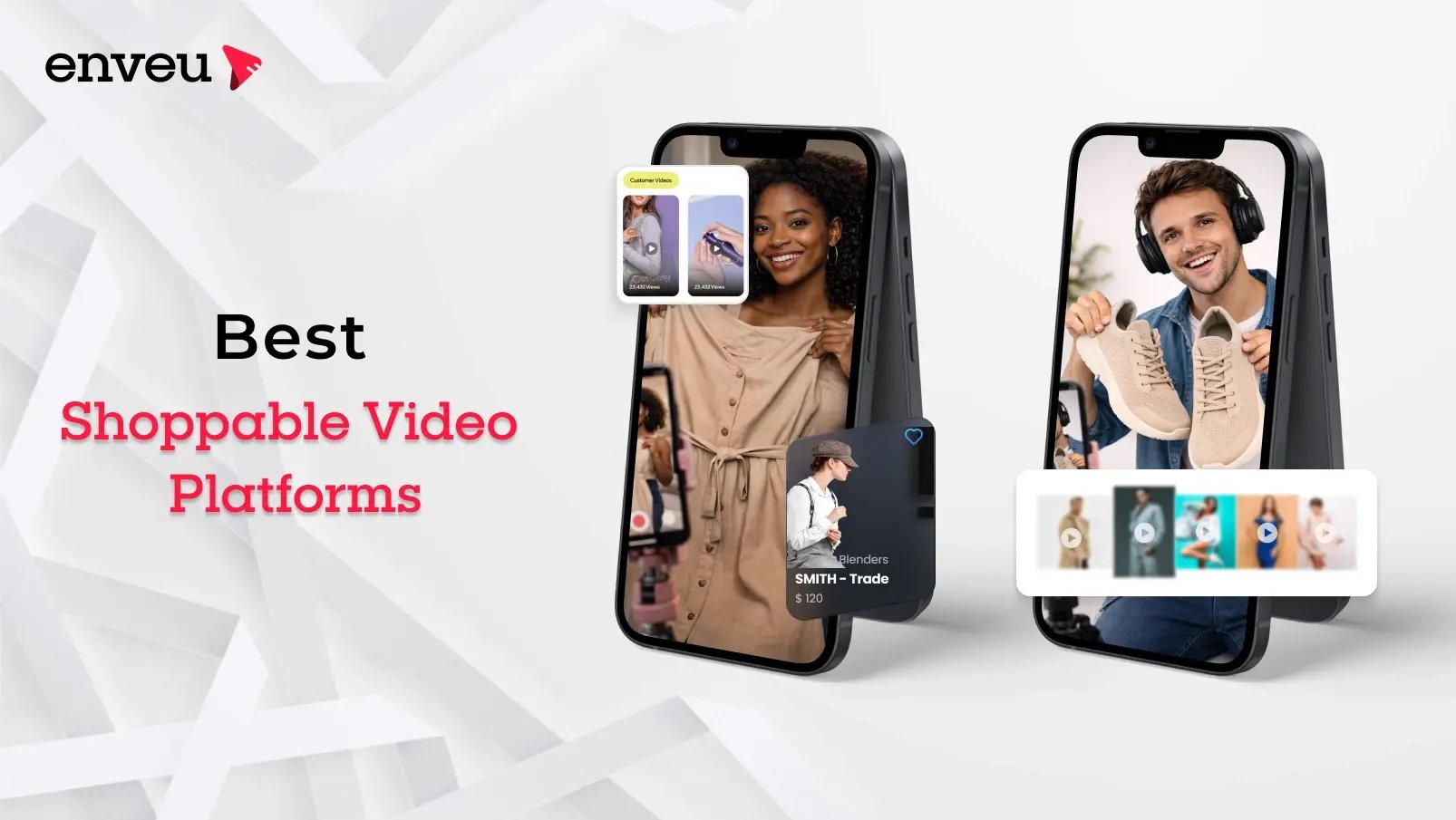
Shoppable video is video that lets viewers buy products directly from what they're watching — tapping a featured item to add it to a cart or check out without leaving the player. It's the core of "video commerce" (or visual commerce): turning content into a storefront through product tags, interactive overlays and live shopping. Formats range from tagged on-demand clips to live shopping streams, and it works because it shortens the path from inspiration to purchase.
What is shoppable video?
Shoppable video is any video with built-in buying: clickable product tags, overlays or links that let a viewer purchase what they see, often without leaving the video. Instead of watching and then searching for a product elsewhere, the viewer acts in the moment. It's the video expression of video commerce — using content directly to sell — and it turns passive watch time into a shopping surface. Enveu Flow can automate social media publishing too — turning each new asset into clips posted across channels without manual effort.
Shoppable video vs regular video (and what "video commerce" means)
A regular product video is one-way: you watch, and if you want to buy you leave, search, and hope to find the item. Shoppable video closes that loop — the products in the frame are interactive, so the path from "I want that" to "it's in my cart" is a tap, not a detour. Video commerce (also called visual commerce or livestream commerce) is the broader practice of selling through video: shoppable on-demand clips, live shopping streams, and interactive ads all sit under it. The shared idea is that attention and intent are highest while someone is watching, so that's where the buy button belongs.
How does shoppable video work?
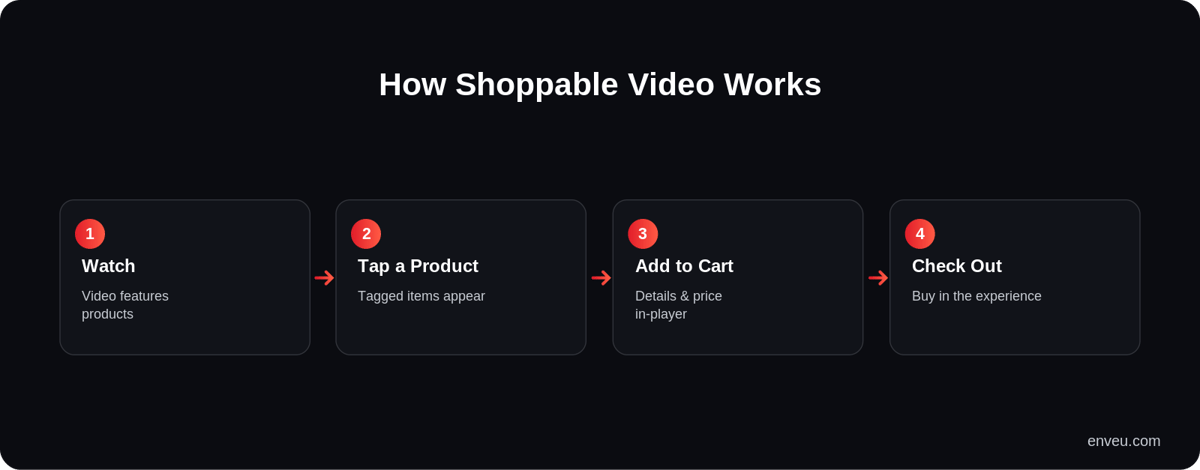
- Watch — the viewer plays a video featuring products.
- Tap a product — tagged items or overlays appear at the right moments.
- Add to cart — product details and pricing surface in-player.
- Check out — the purchase completes in the experience or a linked store.
Behind the scenes, products are mapped to moments in the video (by timestamp or on-screen hotspot), pulled from a product catalog, and the player renders tappable overlays synced to playback — all on top of a reliable video-delivery layer so the experience is smooth on any device.
Types of shoppable video & video commerce
| Format | What it is |
|---|---|
| Tagged on-demand video | Pre-recorded clips with clickable product hotspots. |
| Live shopping | Live streams where hosts demo products viewers buy in real time. |
| Shoppable short video | Vertical, social-style clips with in-video buying. |
| Interactive / branching | Videos where viewers tap to explore and purchase. |
What is live shopping (livestream commerce)?
Live shopping is the fastest-growing form of shoppable video: a host presents products in a live stream while viewers ask questions in chat and buy in real time, often with limited-time offers to drive urgency. Huge in Asian markets and growing elsewhere, it blends entertainment, community and commerce — closer to a live TV shopping channel reinvented for phones. It leans hardest on the video foundation: low-latency live delivery, chat/interactivity, and a checkout that keeps up with a spike of simultaneous buyers.
Why shoppable video works
Shoppable video collapses the distance between discovery and purchase. A product demonstrated on screen plus a one-tap path to buy captures intent while it's highest, which is why visual commerce and live shopping have grown fast — especially for fashion, beauty and lifestyle brands. It also keeps viewers engaged inside your own experience rather than sending them off to a search engine, and it produces rich engagement data (what viewers tapped, watched and bought) that a static product page never could.
Where shoppable video works best
| Industry | Typical use |
|---|---|
| Fashion & beauty | Look-books, try-on and tutorial clips with tap-to-buy |
| Retail & marketplaces | Live shopping events and product-demo streams |
| Home & lifestyle | How-to and styling videos that sell the featured items |
| Creators & influencers | Shoppable short video and affiliate-style tagging |
How to create a shoppable video
- Plan the products — decide which items appear and when they should become tappable.
- Produce the video — on-demand clip or live stream, shot to feature the products clearly.
- Tag & sync — map each product (from your catalog) to its moment or on-screen hotspot.
- Connect commerce — wire in cart and checkout (your store or a commerce platform).
- Publish across devices — deliver on web, mobile and connected TV with smooth playback.
- Measure & iterate — track taps, watch time and conversions, and refine what you feature.
What you need to run shoppable video
Two layers have to work together. The commerce layer — product catalog, cart, checkout, payments — usually comes from your e-commerce stack or a shoppable-video tool. The video layer — adaptive on-demand and low-latency live delivery, interactive-ready players, multi-device apps and monetization — is the foundation everything sits on. Get the video layer wrong and buffering or a laggy live stream kills the sale no matter how good the commerce integration is.
Benefits of shoppable video
- Shorter path to purchase — buying happens in the moment of interest, not three clicks and a search later.
- Higher engagement — interactive video holds attention longer than a static page or a plain clip.
- Own the experience & data — on your own apps you keep the customer relationship and see exactly what viewers tapped, watched and bought.
- Content that sells twice — the same video works as marketing and as a storefront.
- Works on every screen — mobile, web and connected TV, where "lean-back" viewers can still buy.
Shoppable video examples and ideas
The format flexes to almost any catalog. A beauty brand runs a tutorial where every product used is tappable; a fashion label posts look-book clips with buy buttons on each outfit; a retailer hosts a weekly live shopping show with limited-time deals; a homeware store turns how-to videos into shoppable galleries; a creator tags gear in a short-form review. The common thread is that the video is genuinely useful or entertaining first — the commerce rides along rather than interrupting, which is why it converts without feeling like an ad.
Is shoppable video worth it? The future of video commerce
For brands and retailers with visual products and an engaged audience, shoppable video is one of the clearest ways to turn watch time into revenue — and it's growing as connected-TV viewing, short video and live shopping converge. The direction of travel is toward more interactivity everywhere: shoppable ads, live commerce, and on-demand catalogs where any product on screen is buyable. What decides success is less the novelty of the buy button and more the fundamentals underneath it — a smooth, reliable viewing experience and a checkout that doesn't drop the sale. Get those right and the "shop" part takes care of itself. It's also worth starting small: one shoppable tutorial or a single live-shopping event tells you fast whether your audience will buy this way, before you invest in a full video-commerce build. The brands winning with it treat it as an ongoing format, not a one-off campaign — regular shoppable content compounds, because each video keeps selling long after it's published.
The video foundation behind shoppable experiences
Whatever the format, shoppable video needs a solid video foundation: fast, adaptive playback across devices, live streaming for real-time shopping, and flexible monetization. That's where a video platform comes in — the commerce layer (product catalog, cart, checkout) sits on top of reliable video delivery.
Enveu's Experience Cloud provides that video foundation: adaptive live and on-demand delivery, interactive-ready players, and monetization across your own branded apps — the infrastructure a shoppable or live-shopping experience is built on. For the live-shopping side, see IRL streaming and short video.