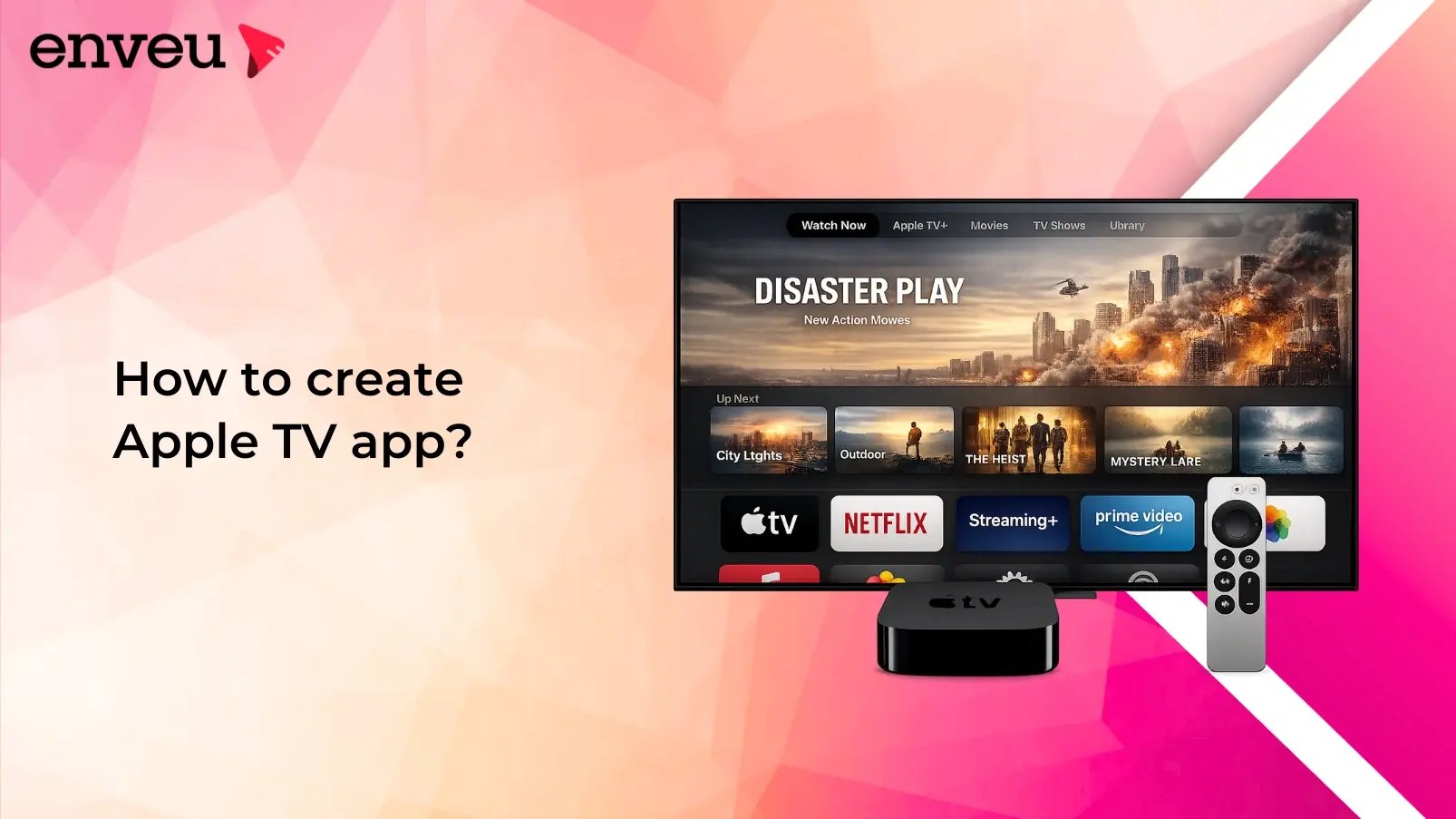
Apple TV reaches a premium, high-spending audience on the biggest screen in the house — which is exactly why so many streaming businesses want an app on it. The good news: there are now two very different ways to get there, and only one of them requires writing Swift. This guide walks through both, so you can pick the path that matches your team and timeline.
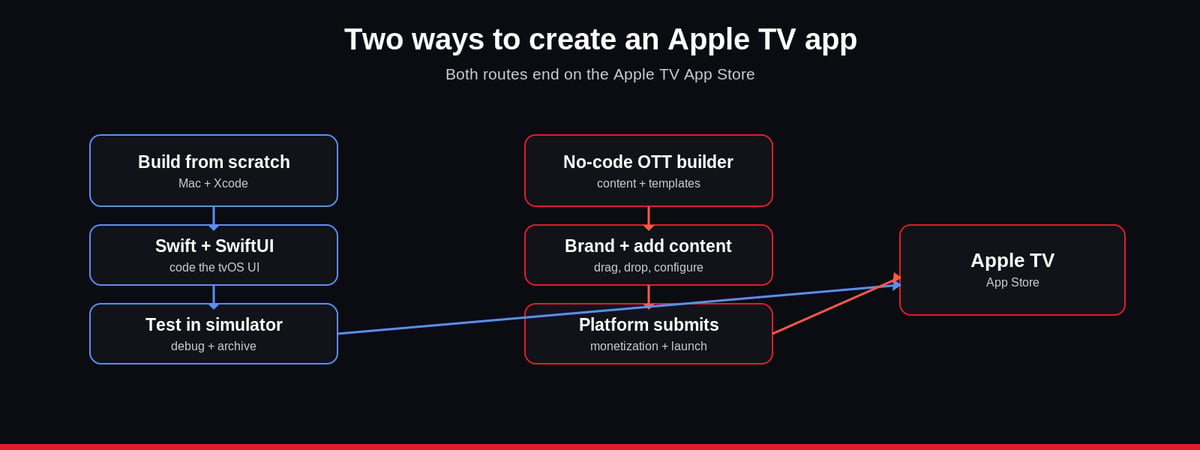
How to create an Apple TV app: You have two routes. Build it from scratch using Apple's Xcode and SwiftUI on a Mac, coding for tvOS and submitting to the App Store — full control, but it needs developers and time. Or use a no-code OTT app builder that turns your content and branding into a ready Apple TV app without programming. Choose from-scratch for highly custom apps; choose a builder to launch a streaming service fast.
What is an Apple TV app?
An Apple TV app is software that runs on tvOS, the operating system powering Apple's streaming media player. Because Apple opened tvOS to third-party developers, any business can publish its own app to the Apple TV App Store — a streaming service, a fitness library, an educational catalogue, and more. Apple TV's appeal is its premium user experience: fast navigation, Siri voice control, tight integration with the Apple ecosystem, and support for 4K, Dolby Vision and Dolby Atmos. Getting your content onto that platform puts your brand in front of a valuable, engaged living-room audience.
It helps to separate two things people mean by "the Apple TV app." One is Apple's own TV app that aggregates shows and subscriptions; the other — the subject of this guide — is your own branded app published to the Apple TV App Store. Building the latter is what lets a streaming business own its presence on the biggest screen in the house, with its own catalogue, branding and monetization rather than living inside someone else's aggregator.
Two ways to create an Apple TV app
Before you start, decide which route fits — it shapes everything that follows:
| Build from scratch (Xcode) | No-code OTT builder | |
|---|---|---|
| Who it's for | Teams with iOS/tvOS developers | Businesses launching a streaming service |
| Tools | Mac, Xcode, Swift, SwiftUI | A CMS and templates — no coding |
| Time to launch | Weeks to months | Days to weeks |
| Control | Total, custom-built | Configurable within the platform |
| Maintenance | You handle every tvOS update | Handled by the platform |
| Best for | Unusual, highly bespoke apps | Branded VOD/live streaming apps |
How to build an Apple TV app from scratch
The native route uses Apple's own toolchain. The core steps:
- Set up the environment. Install the latest macOS and download Xcode (Apple's IDE for building, testing and shipping apps) from the Mac App Store.
- Create a tvOS project. In Xcode, start a new project from the tvOS template and set your app name and organization identifier.
- Build the interface with SwiftUI. Use SwiftUI to lay out views, controls and navigation that adapt to the TV screen — its previews let you see changes instantly.
- Implement app logic. Write the Swift code that handles content, playback and responses to the Apple TV remote.
- Test in the simulator. Use Xcode's tvOS simulator to run the app, then debug and fix issues before release.
- Submit to the App Store. With a paid Apple Developer account, archive the app, add metadata and preview media, and submit it for review.
- Release and monitor. Once approved, publish, then track performance and ship regular updates.
This gives you total control but requires Swift skills, a Mac, and ongoing maintenance for every tvOS release — real cost and time for most teams.
How to create an Apple TV app without coding
If you're launching a streaming service rather than a one-off custom app, a no-code OTT app builder is faster and cheaper. The typical flow:
- Sign up for the platform and select the Apple TV app from its content management system.
- Design with templates. Pick a tvOS-optimised template and customise the branding, layout and navigation to match your identity.
- Add your content. Upload your video library or connect a live source, and organise it into a browsable catalogue.
- Set up monetization. Configure subscriptions, pay-per-view or rentals and connect payment options.
- Configure and launch. Name the app, set languages and regions, choose a category — the platform then tests and submits the app for you.
You get an intuitive, App Store-ready Apple TV app without writing a line of Swift or maintaining the tvOS codebase yourself.
Key considerations for Apple TV app development
Whichever route you take, a few things separate a good tvOS app from an ignored one. User experience comes first — TV audiences expect fast navigation, strong search and a remote-friendly layout. Ecosystem integration (Siri, AirPlay, iCloud) makes the app feel native to Apple users. A clear monetization plan — subscription (SVOD), ad-supported, transactional or hybrid — should be decided early, since it shapes the design. And high-quality, adaptive streaming ensures buffer-free playback on every connection, up to 4K. For a wider view of the device landscape, our Apple TV vs Fire TV comparison is a useful companion.
What language and tools do you need?
Native Apple TV development uses Swift as the programming language, SwiftUI for the interface, and Xcode as the development environment — all running on a Mac, targeting tvOS. You'll also need a paid Apple Developer account to publish. With the no-code route, you need none of these: the builder abstracts the tvOS specifics away, so the only "tools" are your content and a browser.
Benefits of launching an Apple TV app
An app on tvOS is worth the effort because of who and how people watch there. Apple TV reaches a high-income, high-engagement audience on the main living-room screen, where sessions are longer and churn tends to be lower than on mobile. The tight integration with the Apple ecosystem — Siri, AirPlay, shared logins across iPhone and iPad — makes signup and viewing frictionless, which lifts conversion. And the platform's support for 4K, Dolby Vision and Dolby Atmos lets premium content look and sound its best, strengthening the case for a higher-priced subscription. For a streaming business, a polished Apple TV app is often the tier that turns casual mobile viewers into committed, big-screen subscribers.
How much does it cost to build an Apple TV app?
Cost depends entirely on the route. Custom native development means paying iOS/tvOS engineers for weeks or months, plus a paid Apple Developer account and ongoing maintenance for each tvOS update — easily tens of thousands of dollars over the app's life. A no-code builder replaces that with a subscription that covers the app, its updates and delivery, so a full Apple TV app costs a fraction of a custom build and reaches other devices from the same back end. When budgeting, weigh not just the build but the recurring cost of keeping a native app current with Apple's yearly platform changes.
Launch your Apple TV app with Enveu
If your goal is a branded streaming service on Apple TV — and ideally on Fire TV, Roku, mobile and web from the same back end — Enveu's multi-platform app suite builds and maintains your tvOS app without you touching Xcode. It ships adaptive streaming, DRM, multi-language support, profile management and every monetization model, and pushes updates for you, so you reach Apple's premium audience through the same platform that powers your live and on-demand delivery. The takeaway: creating an Apple TV app no longer requires a Swift team — just the right approach for your business.
Written by Shalabh Agarwal, Enveu.